


Photo: Habitat for Humanity Canada
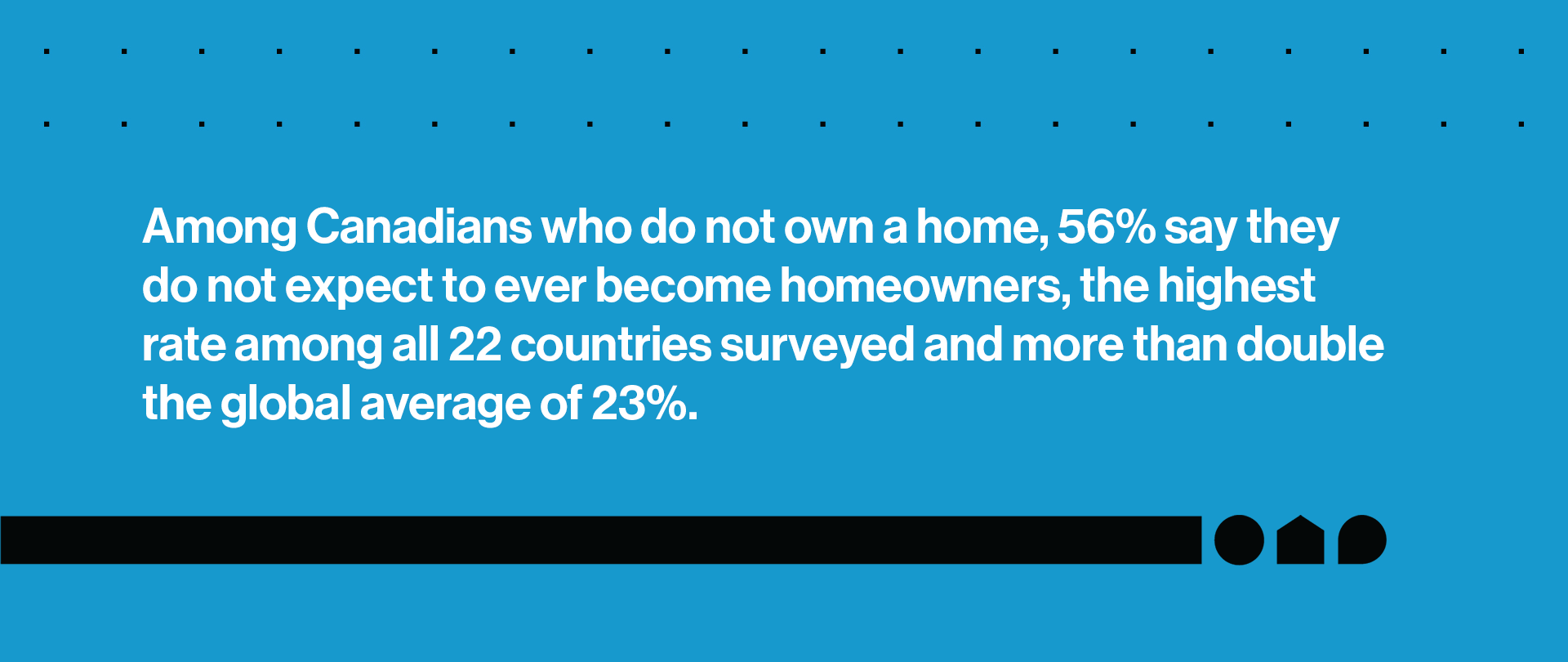
Canada just topped a global ranking no country wants to win. New research released today by Habitat for Humanity International finds that Canadians are the most likely of any country surveyed to have given up on ever owning a home: 56% of Canadian non-homeowners say they do not expect to become homeowners at any point. That is more than double the global average of 23%, and worse than the United States at 42%, the United Kingdom at 50% and Australia at 52%. (GlobeNewswire)
The study, called Home at What Cost?, surveyed more than 30,000 people across 22 countries between April and June, including 1,400 Canadians — with extra interviews conducted with people living in informal housing in Toronto and Vancouver. It is less a snapshot of prices than of psychology, and the psychology is bleak. Asked why they have lost hope, 54% of Canadian non-homeowners say homes are simply too expensive, half say their income is too low, and 41% say they cannot save enough for a down payment. Three-quarters of Canadians believe there are too few affordable homes available to buy, and 81% agree that rising housing costs make it difficult to become a homeowner. (Habitat for Humanity Canada)
Here is the paradox that should haunt anyone watching the GTA market. This wave of resignation is cresting at the precise moment resale conditions are the most buyer-friendly they have been in years — prices well off the 2022 peak, inventory elevated, sellers negotiating. The barrier is no longer just the sticker price. It is income, stability and trust. Half of non-homeowners say their income is too low, and even among the 91% of Canadians who feel secure in their housing today, 44% say a single unexpected setback — a job loss, an illness, a major expense — could threaten their ability to stay housed. Two-thirds of Canadians made at least one financial sacrifice in the past year to cover housing costs: 36% spent less on food or groceries, a quarter raided savings or emergency funds, and 40% cut back on social activities. People are not just priced out of buying. They are being worn down by staying.
"Canada's housing crisis has become an opportunity crisis. When people are sacrificing food, savings, and peace of mind to afford housing, they can never get ahead. They can't build the futures they want for themselves and their children."
— Pedro Barata, President & CEO, Habitat for Humanity Canada
The generation that should be forming the next wave of GTA buyers is the one bending hardest. Nearly two-thirds of younger Canadians say housing costs make it difficult to consider starting a family, and 46% call their housing situation one of the biggest sources of stress in their lives — well above the 35% global average. Housing is no longer just delaying adulthood for young Canadians. It is quietly cancelling it.
And the institutions that are supposed to fix this have a credibility problem of their own. Nearly two-thirds of Canadians — 64% — believe the country's housing system is broken, rising to 69% among younger adults, while just 29% believe current housing policies are effective. That is the backdrop against which every new announcement lands: a public that has stopped believing the system works for them.
"We have to restore Canadians' optimism in owning a home — whether that's a market home or through an affordable program like Habitat's. For the thousands of families who've purchased a home from us, the stability of affordable homeownership is often the difference between putting their life on hold and building the life they want."
— Pedro Barata, President & CEO, Habitat for Humanity Canada
So what does this mean for the GTA, where Toronto's own streets supplied some of the survey's hardest interviews? For buyers who do have secure employment and a down payment within reach, the message is almost inverted: the crowd has never been thinner, and the competition for well-priced homes softer. Pessimism at this scale does not move prices by itself — but it does keep a generation of potential buyers on the sidelines, which is part of why demand stays muted even as affordability on paper improves. The risk is that the resignation becomes self-fulfilling: the longer young households assume ownership is impossible, the longer they rent, and the more the market's shape is decided by the few who still believe. For sellers, the takeaway is sobering in a different way. The buyer pool is not just smaller — it is psychologically depleted, and winning those buyers requires pricing and presentation that acknowledge the exhaustion, not the exuberance of 2022.
There is one date that could shift the mood, and it is close: Toronto votes in its municipal election later this month, and housing — supply, approvals, the cost of building — will be unavoidable on every platform. Whether the next council can move the 29% who believe current policies work is the open question. Until then, the survey leaves the market with its starkest number: in a country built on the promise of a home of its own, more than half of those without one have stopped believing it will ever happen.
That's the market as it stands — we'll be back tomorrow evening with the next round of headlines.
Compiled by the HomesFound team from the reporting linked above.
